

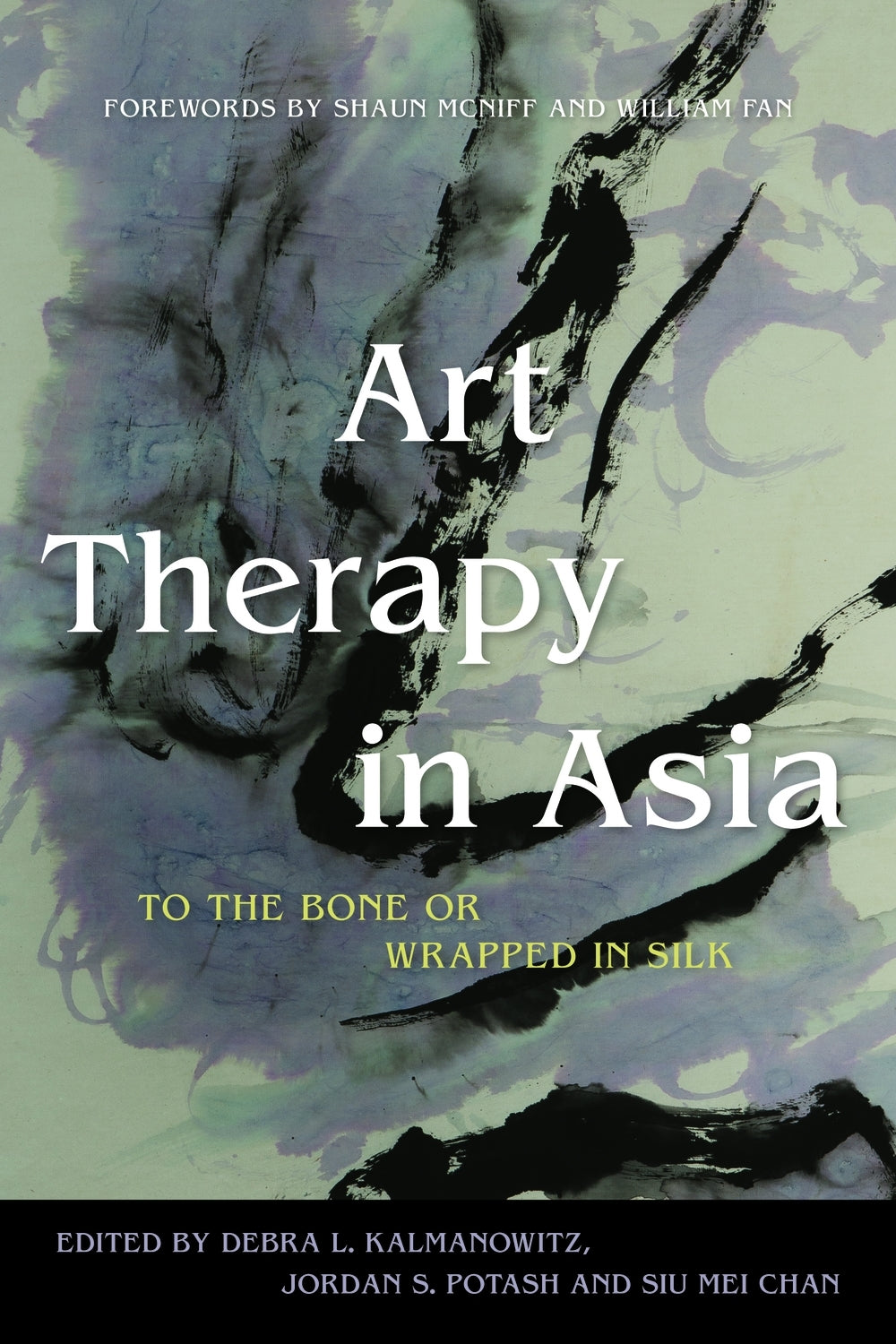
Art Therapy in Asia
To the Bone or Wrapped in Silk
- Foreword
- Editors
Regular price
£35.00
Regular price
Sale price
£35.00
Unit price
per
- ✔️ Free UK delivery over £40
- ✔️ Careful, protective packaging
- ✔️ Direct from the publisher

As art therapy rapidly makes its mark across Asia, this book documents how the field of art therapy is taking shape as both a profession and a discipline in this region. It looks at how art therapists in Asia are assimilating Western models and adapting them to create unique home-grown practices.
Building on theory, research and practice that has been developed in the West, practitioners throughout Asia are creating innovative art therapy programs that reflect cultural diversity and draw on ideas from Chinese medicine and Eastern philosophy, spirituality and art traditions. With chapters from leading art therapists and community artists in Hong Kong, Taiwan, Japan, Korea, Cambodia, Thailand, China, India, The Philippines and Singapore, this book pulls together thought-provoking perspectives and effective approaches from which East and West can both learn.
The first of its kind, this book will be an informative and inspiring addition to the bookshelves of all art therapy professionals and students, as well as anyone with an interest in Eastern cultures and cross-cultural working.
Building on theory, research and practice that has been developed in the West, practitioners throughout Asia are creating innovative art therapy programs that reflect cultural diversity and draw on ideas from Chinese medicine and Eastern philosophy, spirituality and art traditions. With chapters from leading art therapists and community artists in Hong Kong, Taiwan, Japan, Korea, Cambodia, Thailand, China, India, The Philippines and Singapore, this book pulls together thought-provoking perspectives and effective approaches from which East and West can both learn.
The first of its kind, this book will be an informative and inspiring addition to the bookshelves of all art therapy professionals and students, as well as anyone with an interest in Eastern cultures and cross-cultural working.
- Published: Apr 15 2012
- Pages: 336
- 230 x 152mm
- ISBN: 9781849052108
Press Reviews
Play for Life
This is a clearly presented and detailed text, offering a wealth of knowledge and many case studies from leading art therapists and community artists in Asia. This book has helped to expand the understanding of art therapy as a whole and has demonstrated the growth in the profession. For those members who are interested in art therapy and meeting the needs of different cultures then this book is likely to be an interesting and helpful read.
Therapy Today
a wide-ranging and magnificent addition to the literature for any practitioner working with patients from Asian cultures... each reader will take something different from this excellent and engaging book.
From the foreword by Shaun McNiff, PhD, professor at Lesley University, Cambridge, Massachusetts, USA
Art Therapy in Asia makes a world statement about the art therapy process...[It] embraces the complexity of cultures, human differences, and universal aspects of experience…One of the greatest compliments I can give [this book] is that it presents more questions and possibilities than answers and thus expands and sets the stage for future dialogue, research, creation and professional development within a global context.
Bobbi Stoll, founder of the International Networking Group of Art Therapists (ING/AT) and Past President of the American Art Therapy Association (AATA), currently chair of the International Member Subcommittee of the AATA, Los Angeles, USA
This book not only enriches and promotes the growth and healing potential of art therapy in the Eastern world, it also offers invaluable insights from the very sources of many Asian theories, philosophies and practices already fully or partially adopted by Western professionals. Art Therapy in Asia may become Asia's most valuable healing export to the world. I hope it is translated into all languages for doctors, teachers, and therapists of all disciplines.
Judith A. Rubin, Ph.D., ATR-BC, Department of Psychiatry, University of Pittsburgh, President of Expressive Media, Inc. and Past President and Honorary Life Member of the American Art Therapy Association, USA
Although I've visited and taught art therapy in Korea, Japan, Taiwan, China, India, and Thailand, this book opened my eyes and expanded my mind in breathtaking ways. I hope that all Western art therapists will read and learn from this thoughtful, stimulating contribution to the global growth of art therapy.
Chris Wood, author of Navigating Art Therapy: A Therapist's Companion and Director of Art Therapy Northern Programme, Sheffield, UK
The lovely metaphor and question is the essence of the book. Is art therapy in Asia steeped to the bone in the cultures of the East, or do we know it is Asian by the merest touch of silk? The book shows both of these to be part of the answer. Kalmanowitz, Potash and Chan have gathered chapters from art therapists working in ten regions across Asia and the results are inspiring. They show the potential for adapting art therapy for different places and people in the world. They give touching insight into different Asian practice, and they show how things shared are helpful for practice everywhere.
Val Huet, Chief Executive Officer, British Association of Art Therapists
This book is an important departure from previously published literature on art therapy: it sensitively and constructively challenges euro-centric assumptions about health, identity and spirituality and it also offers some very good practical advice on the practice of art therapy in Asia. It therefore provides a great contemporary overview of this topic and describes an inspiring way to think about ethnicity, culture and healing that many art therapists will find helpful. Its relevance goes much further than Asia and it should be widely read worldwide.